

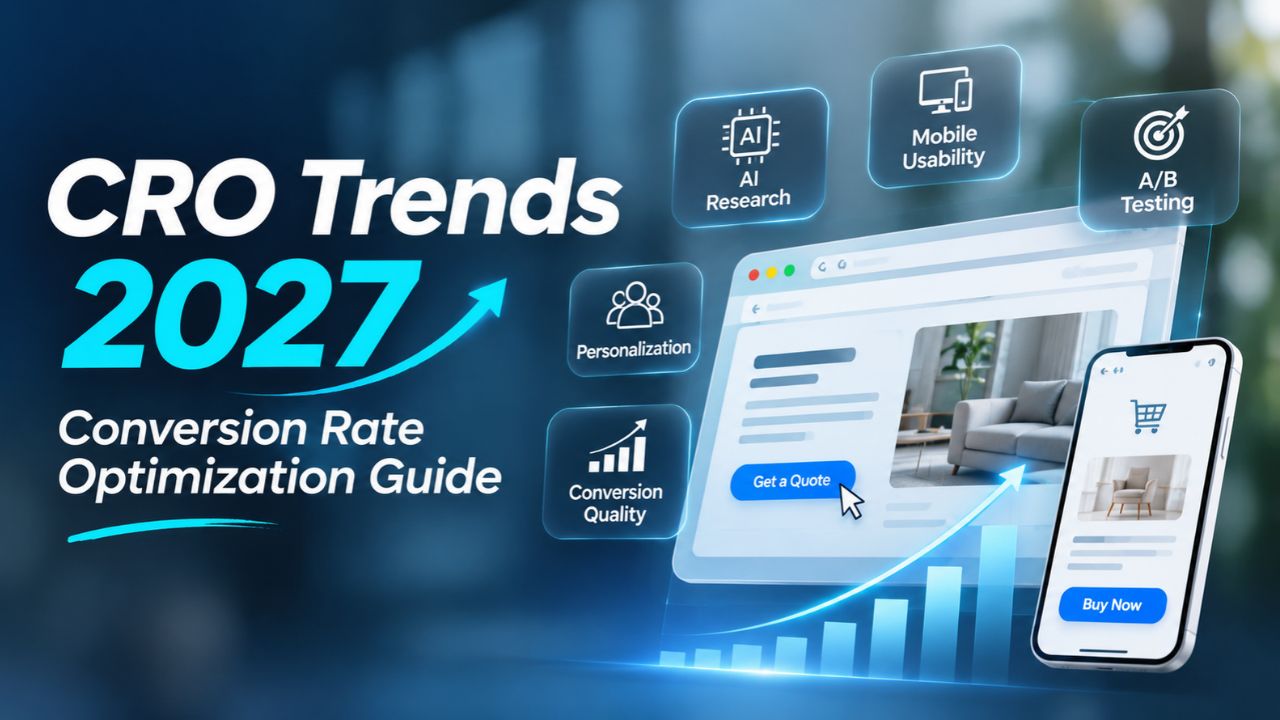
Conversion rate optimization trends for 2027 are likely to bring faster research, more relevant website experiences, and closer attention to the quality of each conversion. For U.S. businesses, the practical goal remains clear: help the right visitors complete an action that creates business value.
That might be a purchase, a qualified quote request, or a booked consultation. More activity is useful when it produces better outcomes for both the customer and the business.
This 2027 outlook builds on existing analytics capabilities and established experimentation methods. It focuses on improvements businesses can prepare to test rather than guaranteed performance gains.
1. AI-Assisted Research Can Make Customer Friction Easier to Investigate
Reviewing session recordings and customer feedback takes time. AI tools can help summarize those materials and identify patterns worth investigating.
Microsoft Clarity already offers AI-generated session insights. Its documentation also notes that generated summaries can contain mistakes, so observations still need review. Source: Microsoft Learn
For 2027, use AI-assisted research to support a practical workflow:
- Identify a page with a meaningful drop-off.
- Review behavior by device and traffic source.
- Check recordings and customer feedback.
- Develop a specific explanation for the problem.
- Test a change that addresses that explanation.
An AI summary can suggest that a form is confusing. It cannot prove why every visitor left or whether your proposed solution will work.
2. Landing Pages Should Reflect the Visitor’s Decision Stage
A person arriving from a product demonstration may have different questions from someone searching for an urgent local service.
As businesses plan for a wider mix of discovery channels in 2027, landing page relevance should be a central CRO priority.
Match the page to the promise that brought the visitor there. If an ad promotes installation services, explain availability, service areas, project requirements, and the next step. If content compares products, provide meaningful differences and a clear path to the relevant product pages.
Avoid assuming that a new traffic source needs an entirely separate website experience. Start with evidence about its visitors, then test the changes that address their needs.
3. Mobile Usability and Purchase Transparency Remain Essential
New tools will not compensate for a checkout that fails on a phone.
Include mobile testing in your 2027 conversion optimization plan. Review form fields, error messages, navigation, payment steps, and page responsiveness on real devices.
For U.S. ecommerce customers, make prices in USD, delivery expectations, shipping charges, and return conditions easy to understand before purchase.
For service businesses, explain what happens after a form submission. Tell potential customers whether they will receive a call, a scheduling link, or a project estimate.
Accessible labels, readable text, and controls that work with a keyboard can also make the experience easier to use. Prioritize changes that help people complete the task reliably.
4. Personalization Should Be Tested Against a Clear Baseline
Personalization is a useful area to explore for 2027 when it addresses a known customer need.
A returning customer may benefit from relevant product recommendations. A visitor searching within a service area may need location-specific information. Someone viewing a technical product may need a compatibility guide.
Start with a specific hypothesis and compare the personalized experience with a baseline. Measure whether it improves completed purchases or qualified inquiries without creating confusion.
Avoid collecting more personal information than the experience needs. Keep privacy choices meaningful and ensure that essential pricing, policies, and product facts remain clear.
5. Profit and Lead Quality Should Guide CRO Decisions
A higher conversion rate can hide a weaker business outcome.
For example, removing qualifying questions might increase form submissions while producing more inquiries outside your service area. A large discount might increase orders while reducing profit.
Use conversion rate alongside measures such as:
- Revenue per visit.
- Contribution margin per order.
- Cost per acquired customer.
- Qualified lead rate.
- Lead-to-customer conversion.
- Refunds and repeat purchases.
For an illustrative calculation, 100 purchasing visits out of 10,000 visits equal a 1% conversion rate. Increasing that to 200 purchasing visits produces a 2% rate. The financial benefit depends on order value, costs, and customer quality.
Define your conversion and denominator consistently so you can compare results accurately.
6. Strong Experiment Design Will Matter More Than Test Volume
Faster tools can make it easier to launch many variations. Your 2027 testing program should prioritize useful questions and reliable decisions.
Choose a primary metric before the test. Decide what improvement would matter commercially and estimate how much data you need to detect it.
Randomly assign eligible visitors, account for the sales cycle, and avoid declaring a winner because of a short-lived early lead.
For low-traffic businesses, customer interviews, usability reviews, and fixing verified technical problems may be more useful than an underpowered A/B test.
How to Start Your 2027 CRO Program
Audit the pages closest to revenue first: product pages, service pages, quote forms, booking flows, and checkout.
Fix confirmed errors, establish a baseline, and rank opportunities by likely business impact and implementation effort. Keep a record of the hypothesis, result, and decision for every experiment.
Frequently Asked Questions
What Is a Good Conversion Rate for 2027?
There is no universal target. Industry, traffic source, price, device, and conversion definition all affect the rate. Compare your own results over time and assess whether improvements also increase customer value.
Will AI Replace A/B Testing?
AI can help generate ideas, summarize evidence, and prepare variations. It does not automatically establish cause and effect. Controlled testing remains useful when you need to determine whether a change produced an improvement.
Can CRO Changes Affect SEO?
Yes, especially when experiments change content, URLs, or accessibility. Google’s guidance recommends avoiding cloaking and removing test elements when an experiment is complete. Coordinate CRO with SEO so changes remain understandable to users and search engines. Source: Google Search Central
Turn Better Experiences Into Better Results
Build your 2027 CRO plan around the questions, obstacles, and decisions your customers face.
To connect website improvements with your SEO and acquisition strategy, explore Advertora and identify the conversion opportunities that matter most to your business.